Review Your Life with

Cotton Wall Coat
Natural and
Unique Colours

Belka’s Natural and Unique Colors

No chemical dyes are added to Belka products when coloring. We produce Belka’s unique colours from the fantastic shades of nature. It brings cotton together with the beauty coming from the colors of plants. In this way, it does not lose anything from its naturalness. 

How We Dye Belka?

Reactive Dyeing

We use the reactive dyeing method to create Belka colors. For cotton products, manufacturers usually prefer reactive dyestuffs. With reactive dyeing, cotton fibers are dyed. The required alkaline environment develops, and with the salt, the uptake of dyestuff by the fiber increases. Thus, the dyeing process takes place. During reactive dyeing, there is no need to add any substance other than dye and salt. For this reason, experts in the industry consider this dyeing process a completely natural method.

Bibliography
[1] Tutak M., Özdemir A. O., Reactive Dyeing of Cationized Cotton: Effects on the Dyeing Yield and the Fastness Properties, Journal of Applied Polymer Science, 119: 500 – 504, 2011.
[2] Ahmed NSE, The use of sodium in the dyeing of cotton with reactive dyes, Dyes Pigments, 65, 221, 2005

Recyclable Cotton Wallpaper Belka

Recycle For The Next Generations

Belka is made of 100% pure cotton. Cotton is a recyclable and reusable product. When some products are recycled, their structure starts to deteriorate. But when products such as gold, iron, and cotton are recycled, their structure does not deteriorate. They can be used over and over again, and their value does not decrease. Made from 100% cotton, Belka can be recycled and reused.

Use Belka To Protect The World!

Importance of Using Recyclable Products

Prevents the depletion of our natural resources. It saves energy. Increases the fertility of our soils. Reduces our raw material consumption. It benefits the economy of our country. It also benefits the world economy. Reduces our garbage waste. Our greenhouse gas production that causes global warming decreases. Thus, we will take a big step to prevent global warming. The search for raw materials for production ends. It provides production again from the existing product. Thus, we provide our raw material needs from recycling products.

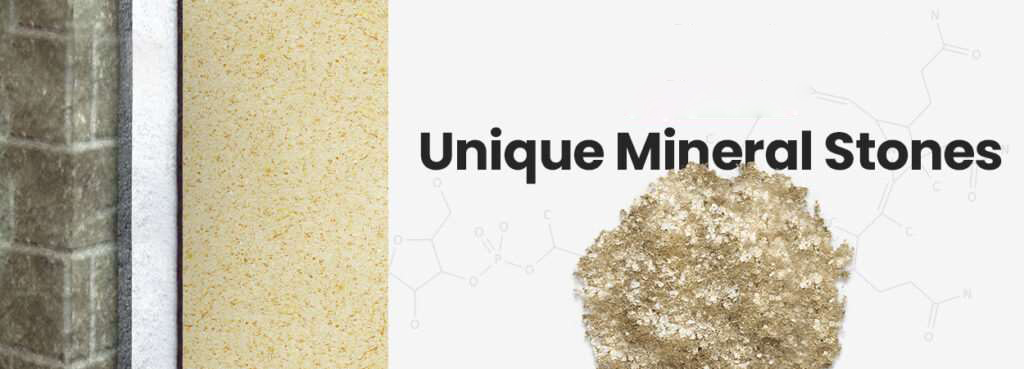
Belka's Unique Mineral Stones

Mineral Stone / Mica / Muscovite

One type of mineral stone is mica. According to the research conducted by the General Directorate of Mineral Research and Exploration, the importance of mica among industrial raw materials is extremely high. Industrially used micas are muscovite and phlogopite.
Belka mineral stones are muscovite.
Muscovite: It has the chemical formulas below:
KAl2(AlSi3O10)(F,OH)2 or (KF)2(Al2O3)3(SiO2)6(H2O)
Muscovite sheets usually measure 5 meters × 3 meters (16.5 feet × 10 feet). They are mostly transparent and have golden, silver, copper, and similar colors.

Mica Usage Areas

Benefits Of Mica As One of The Mineral Stones

Mica Usage In Living Places

Mica usage areas are diverse. Its use in many different industrial fields reveals its importance.
According to General Directorate of Mineral Research and Exploration information, the main
properties of mica are as follows:

  • Resistant to high tensile and bending
  • Providing heat insulation with its heat-proof feature
  • Resistant to moisture, burning, and melting
  • Decorative appearance with its light-reflecting and transmitting properties
  • Resistant to adhesion and friction
  • Hardens and strengthens the products and prevents also spoilage.

What are the Main Features of Mica, One of the Mineral Stones?

Unique Properties Of Mica

There are over 30 different types of mica in mica minerals. One of the most common and highly mineralized is muscovite. Muscovite can be white and transparent.
Muscovite is a rare mineral stone with a unique insulating feature. For this reason, it is a substance used in diverse industries. See also Properties of Mica.

Uses Of Muscovite

The unique features of mineral stones make them a favorite in many areas. The most important reason for this is the high rate of thermal insulation. Another important reason is its electrical and chemical resistance. See more Muscovite Usage. In addition, the muscovite prevents radiation from passing through, increases water resistance, improves acoustics, increases impact resistance, obtains a fire-resistant product, and many other purposes.
  • Microwave glasses
  • Ceiling
  • Guided
  • Artificial
  • Paint (Provides durability, improves adhesion and waterproofing)
  • Oil well drilling
  • Plaster (Used to improve acoustic properties)
  • Plastics (Increases impact resistance, provides heat resistance.
  • Windows (used for gas lamps and ovens)
  • The rocket propellant, batteries, glass, laser (lithium from lepidolite)
  • Beauty products
  • Concrete block fillers (used for reinforcement, fire resistance, and sound absorption)
  • Wallpaper and wall cladding